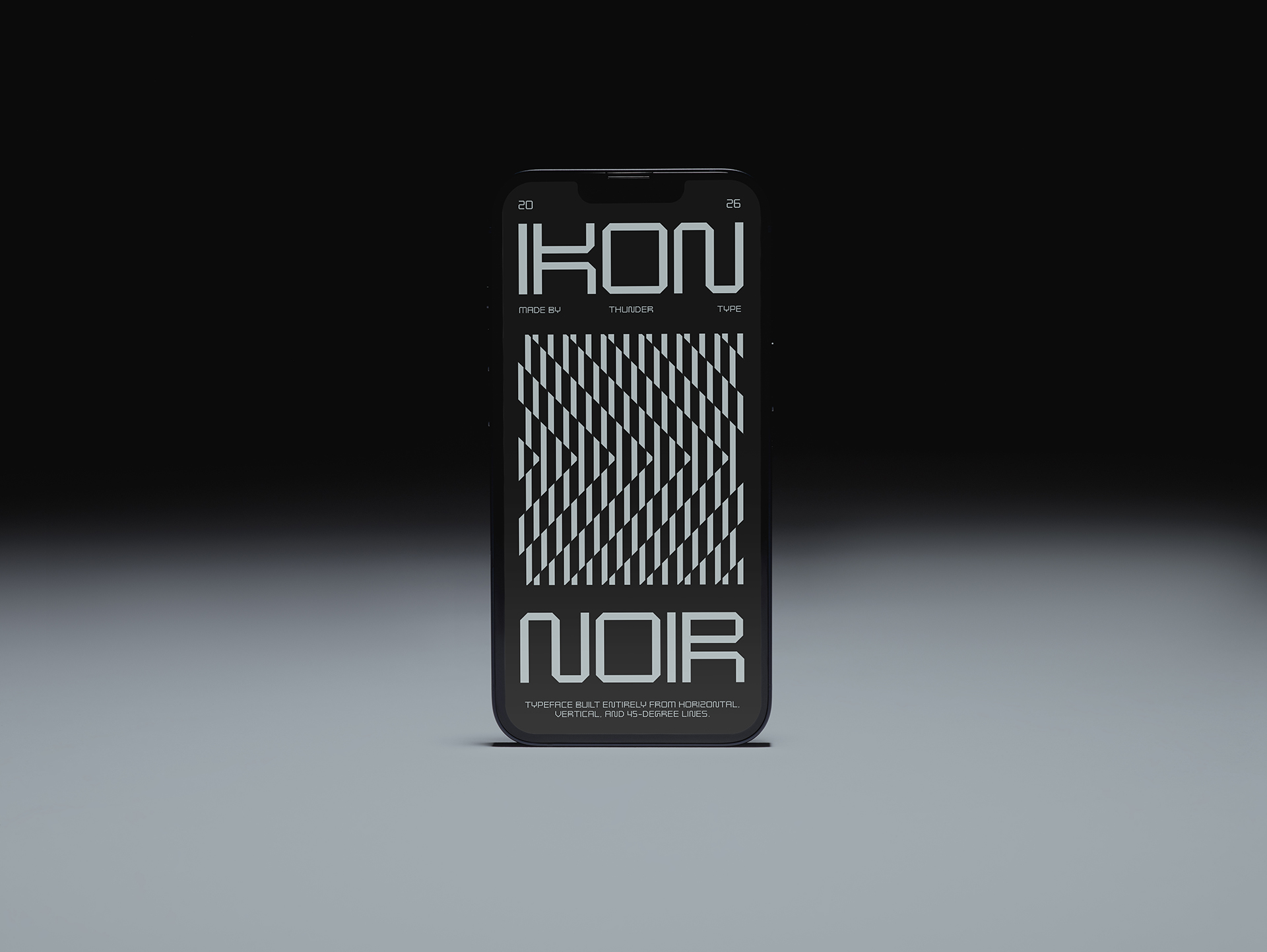
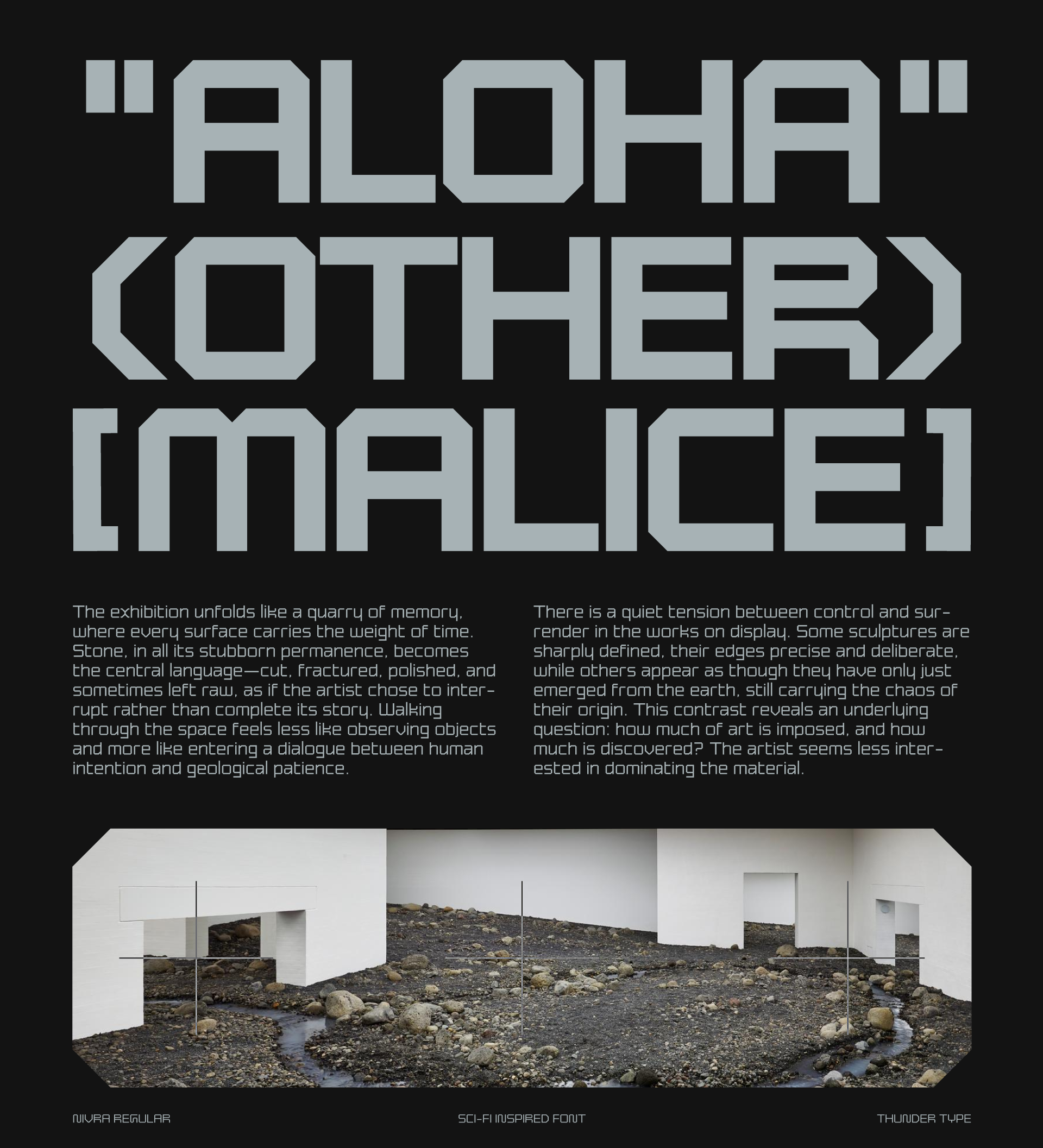
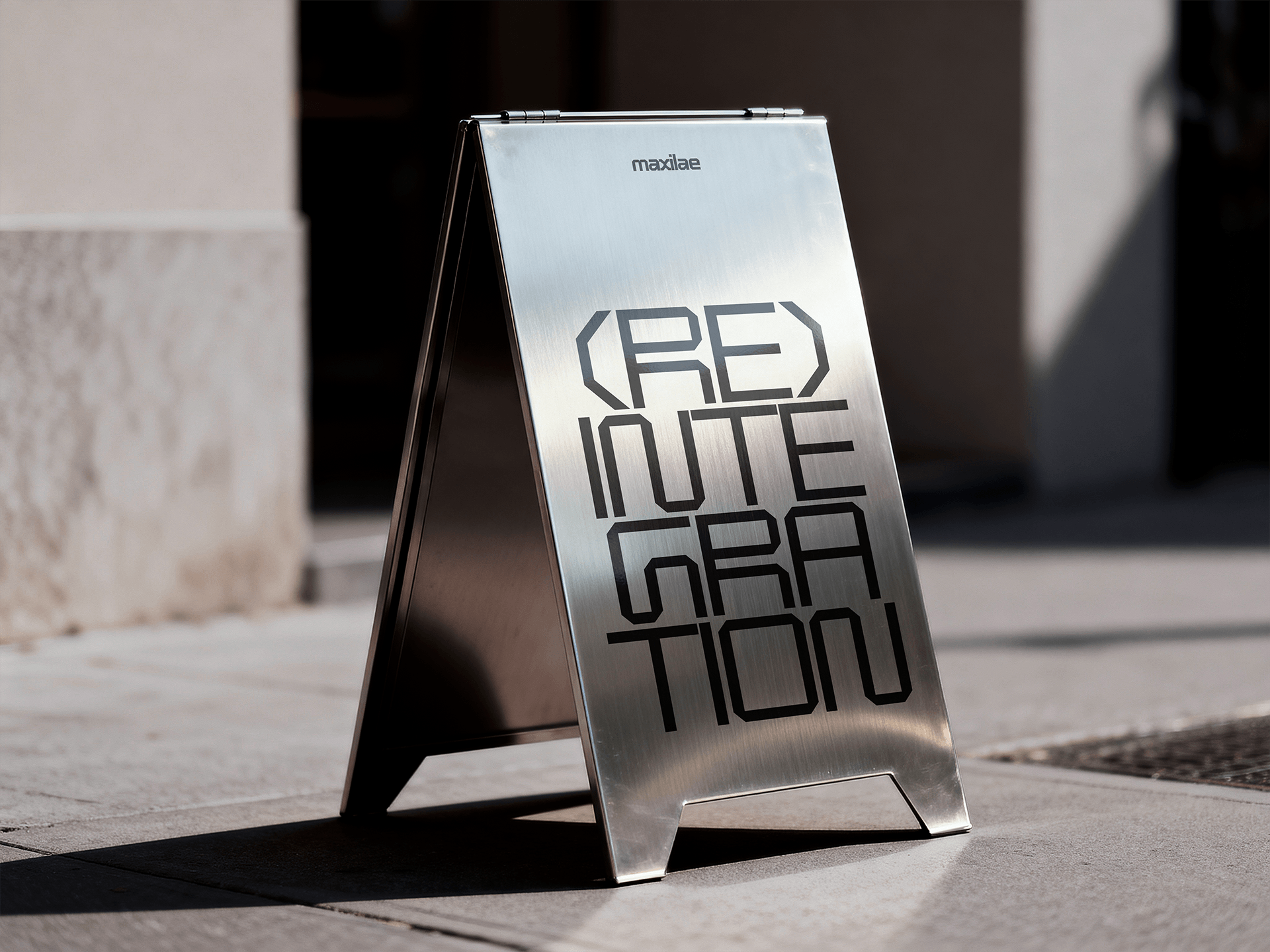
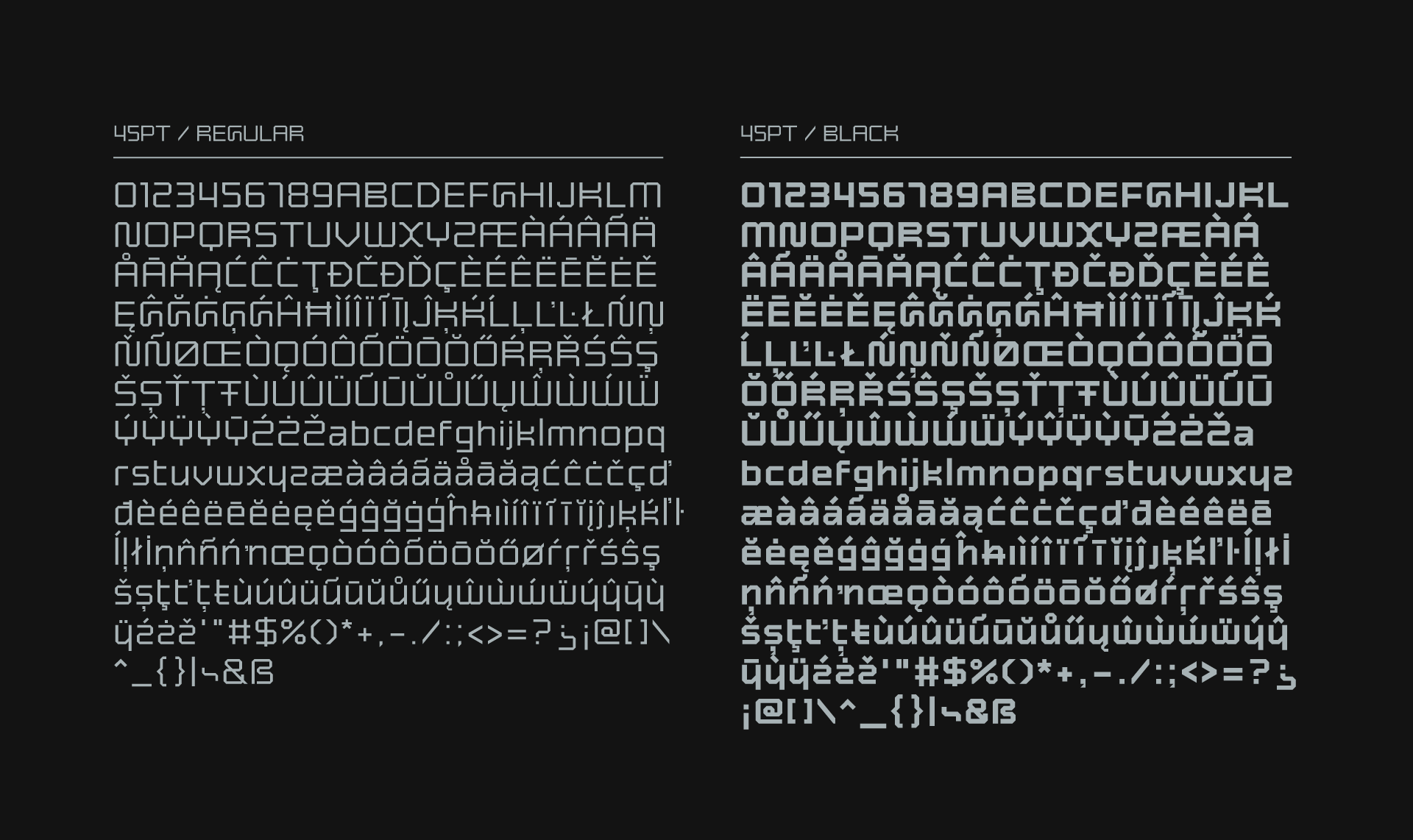
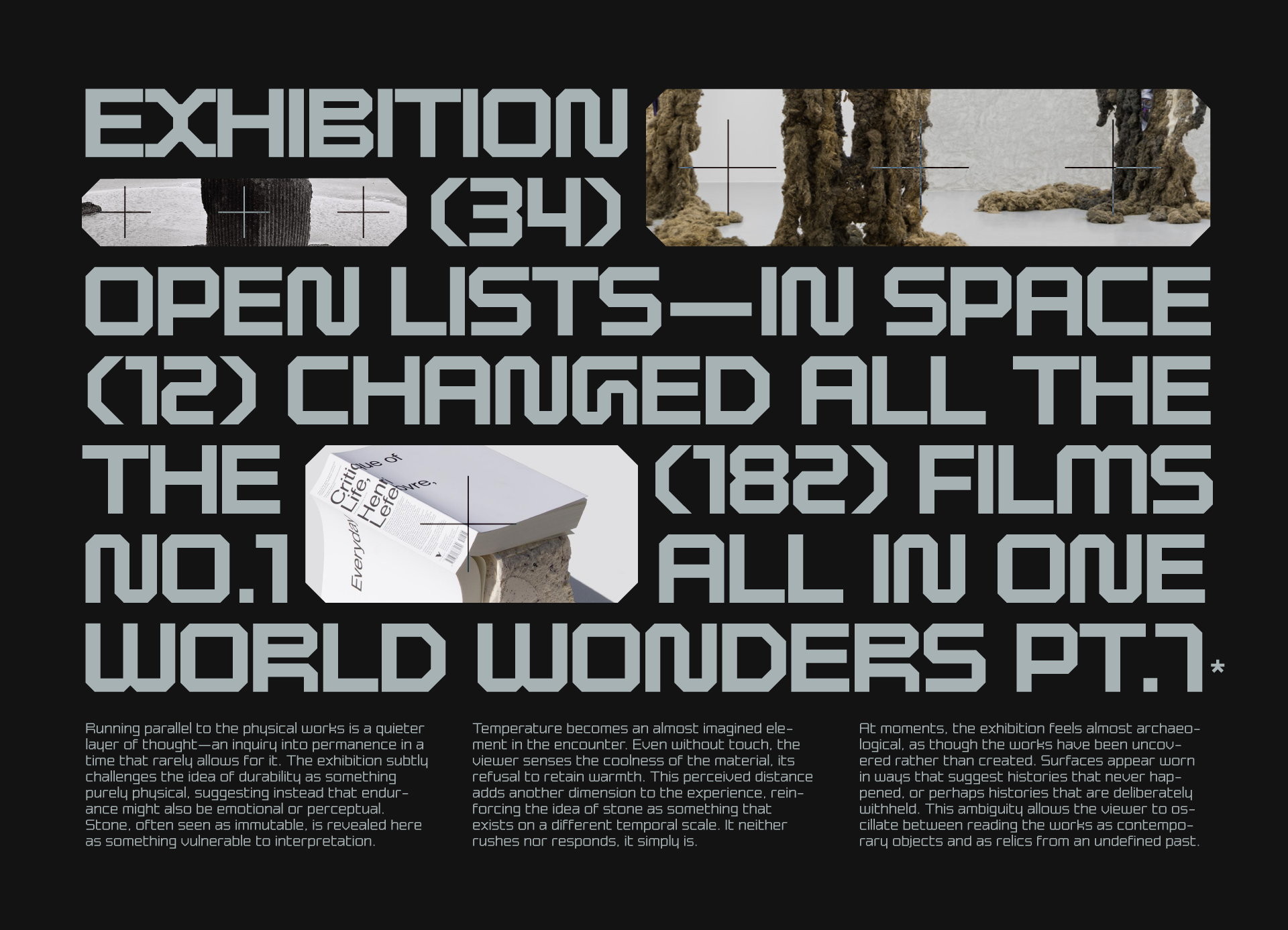
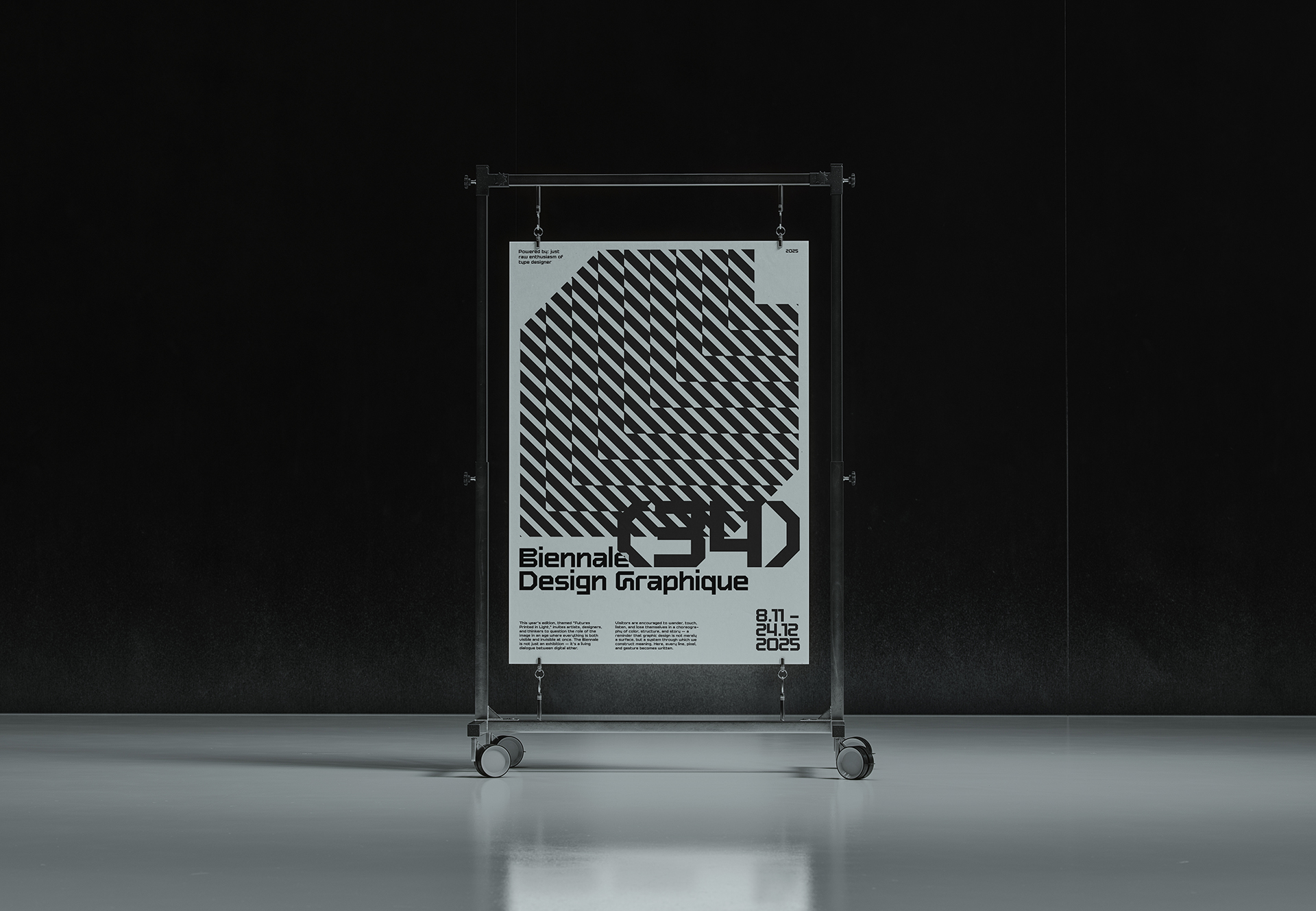
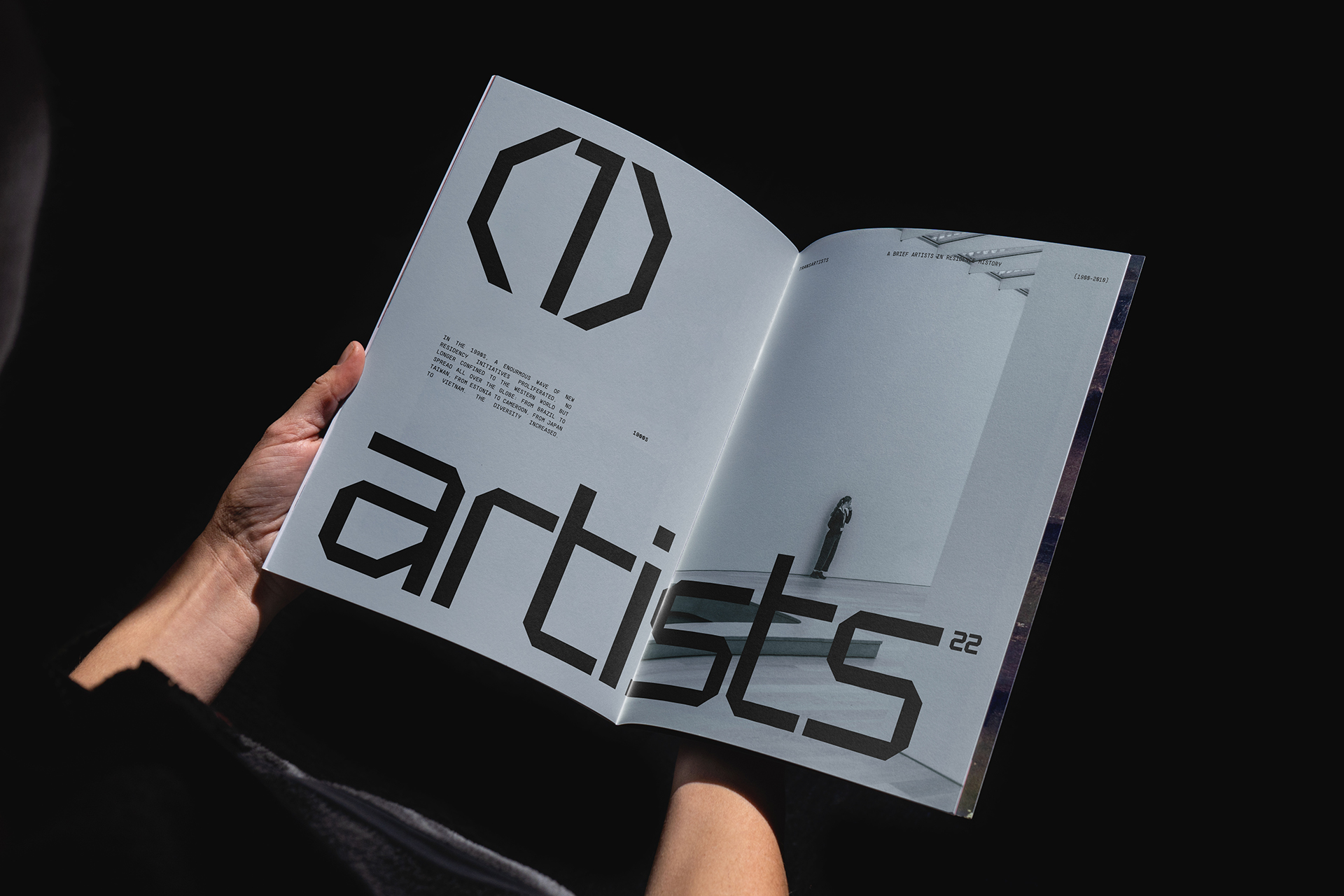
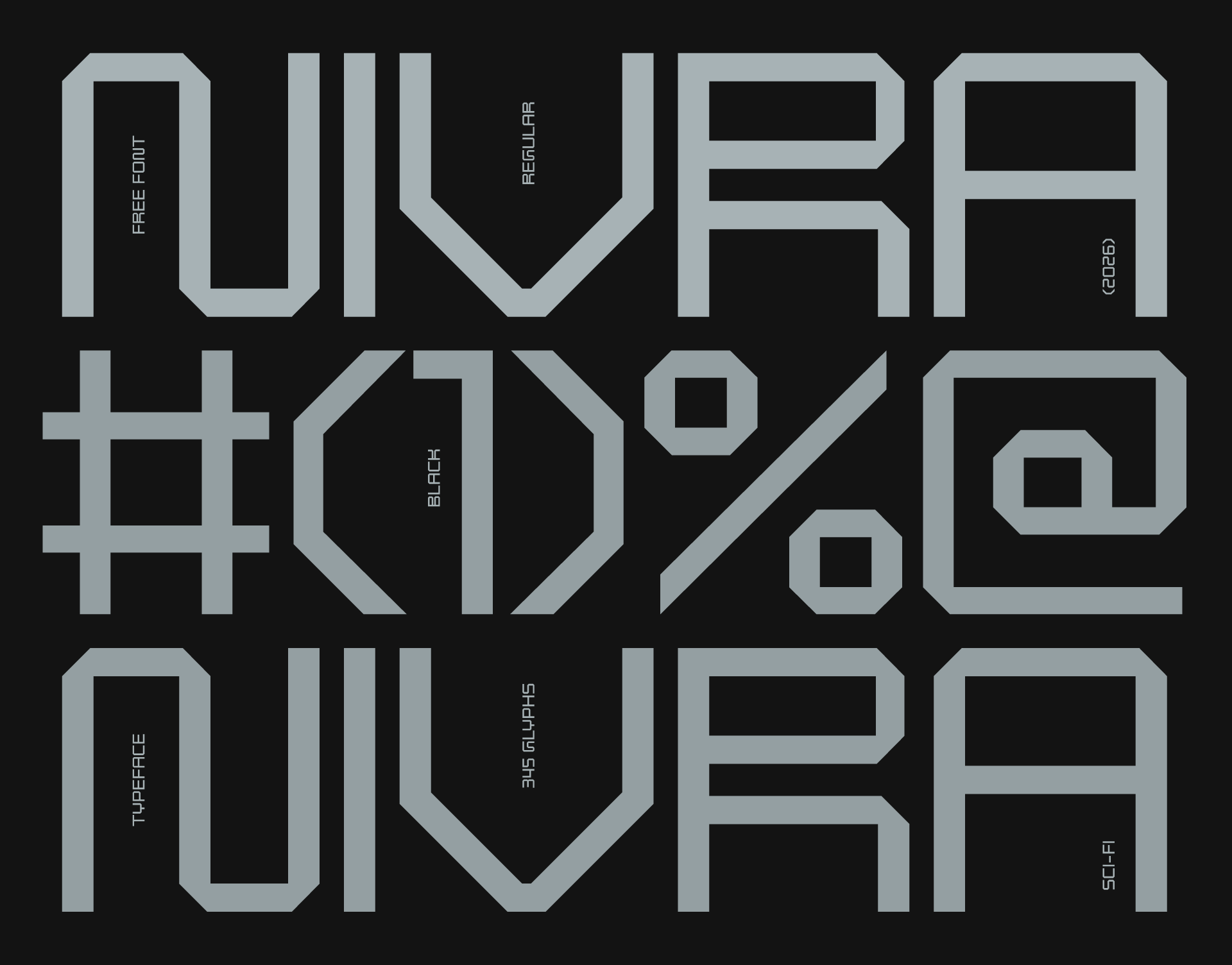
NIVRA IS A TYPEFACE INSPIRED BY ARCHITECTURAL LETTERING AND THE VISUAL LANGUAGE OF SCI-FI FILMS. IT EMBODIES THE CONCEPT OF CONSTRUCTING FORM IN A NEW, FORWARD-THINKING WAY.

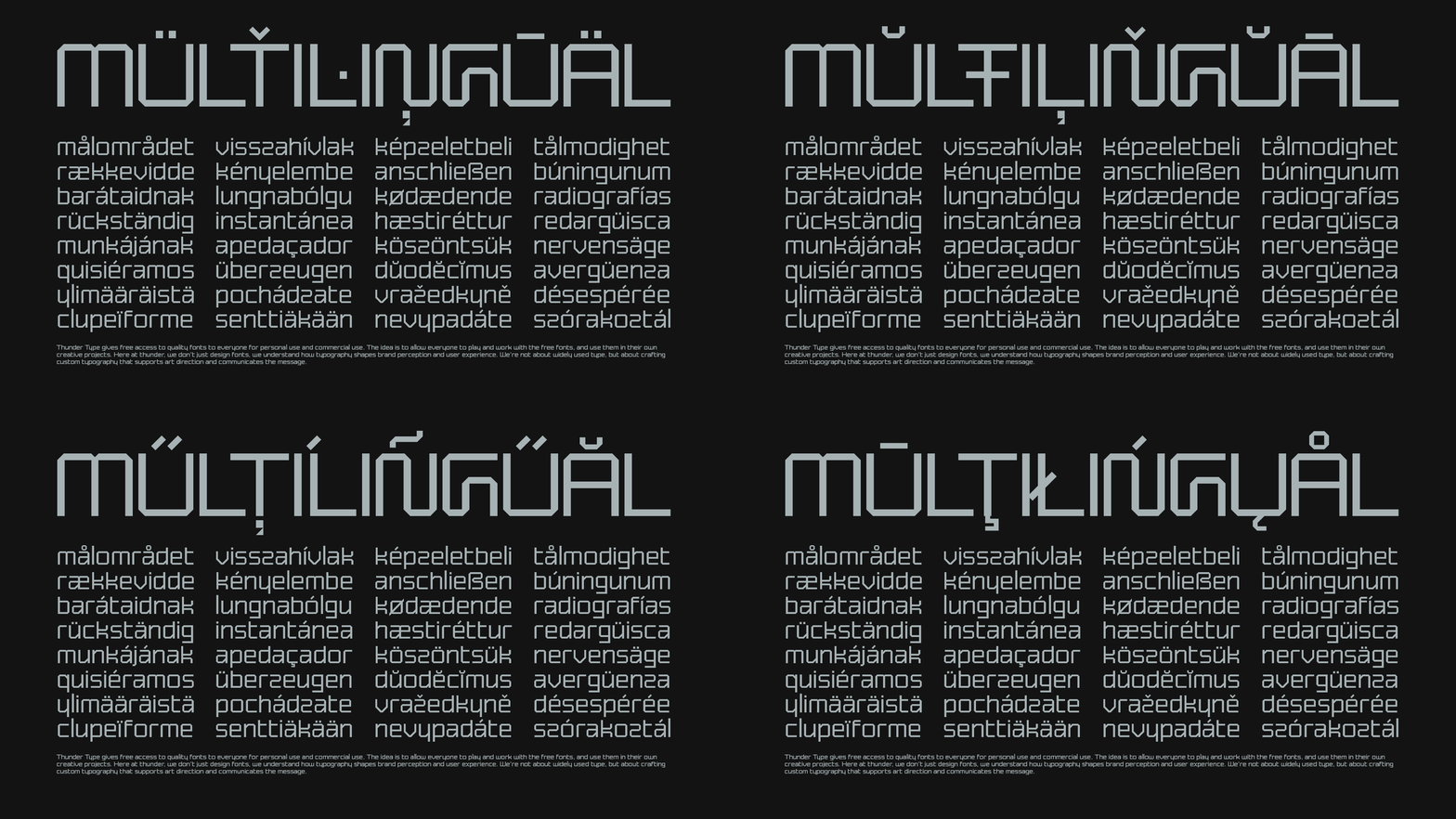
Language Support

Africaans, Albanian, Catalan, Croatian, Czech, Danish, Dutch, Estonian, Finnish, German, Hungarian, Icelandic, Italian, Latvian, Lithuanian,Maltese, Norwegian,Polish, Portugese, Romanian, Serbian, Slovak, Slovenian, Spanish, Swedish, Turkish, Welsh

Info

Thunder Studio gives free access to quality fonts to everyone for personal use and commercial use. The idea is to allow everyone to play and work with the free fonts, and use them in their own creative projects.

Nivra studio?!

Nivra planet?

The exhibition unfolds like a quarry of memory, where every surface carries the weight of time. Stone, in all its stubborn permanence, becomes the central language—cut, fractured, polished, and sometimes left raw, as if the artist chose to interrupt rather than complete its story. Walking through the space feels less like observing objects and more like entering a dialogue between human intention and geological patience. Each piece resists immediacy; it asks to be circled, touched with the eyes, and slowly understood. There is a quiet tension between control and surrender in the works on display. Some sculptures are sharply defined, their edges precise and deliberate, while others appear as though they have only just emerged from the earth, still carrying the chaos of their origin. This contrast reveals an underlying question: how much of art is imposed, and how much is discovered? The artist seems less interested in dominating the material and more in negotiating with it, allowing the stone to assert its own presence. Light plays a crucial role throughout the exhibition, sliding across surfaces and settling into crevices, revealing textures that shift with every step. In certain moments, the stone appears almost soft—its grain catching the light like fabric—only to harden again as shadows deepen. This constant transformation creates a rhythm in the space, where stillness feels alive and the immovable seems to breathe. It’s an experience that blurs the boundary between object and atmosphere. Beyond the physicality, there is a deeper emotional resonance embedded within the material. Stone carries associations of endurance, history, and silence, and the artist leans into these qualities without becoming literal. Some pieces evoke ruins without referencing any specific place, while others suggest monuments stripped of their function. The absence of narrative becomes its own narrative, inviting viewers to project their own sense of time, loss, and continuity onto the work.

What lingers after the initial encounter is a subtle shift in perception. Surfaces outside the gallery begin to feel different—pavements, walls, fragments of architecture—each carrying a newfound weight and significance. The exhibition quietly recalibrates the viewer’s sensitivity, making the ordinary appear deliberate, almost composed. It suggests that stone is never just a backdrop; it is an active participant in the environments we move through, silently shaping our sense of place. There is also an undercurrent of labor embedded in the works, a trace of the body that has engaged with the material. Marks of carving, splitting, and abrasion are left visible, not as imperfections but as records of time spent in contact. These gestures feel both ancient and immediate, connecting contemporary practice with traditions that stretch back to the earliest forms of human making. In this way, the exhibition becomes a bridge between eras, collapsing distances between past and present through the shared act of shaping matter. Sound—or the absence of it—further deepens the experience. The density of stone seems to absorb noise, creating pockets of quiet that feel almost deliberate. Footsteps echo differently, conversations soften, and the space itself adopts a slower tempo. This acoustic quality reinforces the contemplative nature of the exhibition, encouraging visitors to move more carefully, to become aware of their own presence within the environment. In certain works, the boundary between sculpture and architecture begins to dissolve. Larger pieces suggest thresholds, barriers, or fragments of structures that could belong to another context entirely. They invite the body to navigate around them, sometimes even to imagine passing through them. This spatial ambiguity transforms the exhibition into something experiential rather than purely visual, where the viewer’s movement becomes part of the composition.

FEIGNS BRIERS NANCY ORGAN SMEAR HONDA

Running parallel to the physical works is a quieter layer of thought—an inquiry into permanence in a time that rarely allows for it. The exhibition subtly challenges the idea of durability as something purely physical, suggesting instead that endurance might also be emotional or perceptual. Stone, often seen as immutable, is revealed here as something vulnerable to interpretation, capable of shifting meaning depending on context, light, and proximity. There is a recurring sense of fragments throughout the space, as if each piece belongs to a larger whole that remains intentionally absent. These fragments resist completion; they do not point toward reconstruction but toward acceptance of incompleteness. Edges feel abrupt, cuts feel decisive, and yet nothing appears unresolved. The artist seems to embrace the fragment not as a limitation, but as a complete form in itself self-contained, unapologetic, and open-ended. Temperature becomes an almost imagined element in the encounter. Even without touch, the viewer senses the coolness of the material, its refusal to retain warmth. This perceived distance adds another dimension to the experience, reinforcing the idea of stone as something that exists on a different temporal scale. It neither rushes nor responds—it simply is, existing beyond the urgency of human timelines.

DID SOMETHING WILD WITH OUR FONT? SEND IT OVER TO HELLO@THUNDER.RS DID SOMETHING WILD WITH OUR FONT? SEND IT OVER TO HELLO@THUNDER.RS DID SOMETHING WILD WITH OUR FONT? SEND IT OVER TO HELLO@THUNDER.RS DID SOMETHING WILD WITH OUR FONT? SEND IT OVER TO HELLO@THUNDER.RS DID SOMETHING WILD WITH OUR FONT? SEND IT OVER TO HELLO@THUNDER.RS DID SOMETHING WILD WITH OUR FONT? SEND IT OVER TO HELLO@THUNDER.RS DID SOMETHING WILD WITH OUR FONT? SEND IT OVER TO HELLO@THUNDER.RS DID SOMETHING WILD WITH OUR FONT? SEND IT OVER TO HELLO@THUNDER.RS DID SOMETHING WILD WITH OUR FONT? SEND IT OVER TO HELLO@THUNDER.RS DID SOMETHING WILD WITH OUR FONT? SEND IT OVER TO HELLO@THUNDER.RS DID SOMETHING WILD WITH OUR FONT? SEND IT OVER TO HELLO@THUNDER.RS DID SOMETHING WILD WITH OUR FONT? SEND IT OVER TO HELLO@THUNDER.RS DID SOMETHING WILD WITH OUR FONT? SEND IT OVER TO HELLO@THUNDER.RS DID SOMETHING WILD WITH OUR FONT? SEND IT OVER TO HELLO@THUNDER.RS DID SOMETHING WILD WITH OUR FONT? SEND IT OVER TO HELLO@THUNDER.RS DID SOMETHING WILD WITH OUR FONT? SEND IT OVER TO HELLO@THUNDER.RS DID SOMETHING WILD WITH OUR FONT? SEND IT OVER TO HELLO@THUNDER.RS DID SOMETHING WILD WITH OUR FONT? SEND IT OVER TO HELLO@THUNDER.RS
Category

Next